
La Bibliothèque d'Applications présente des modèles construits avec COMSOL Multiphysics pour la simulation d'une grande variété d'applications, dans les domaines de l'électromagnétisme, de la mécanique des solides, de la mécanique des fluides et de la chimie. Vous pouvez télécharger ces modèles résolus avec leur documentation détaillée, comprenant les instructions de construction pas-à-pas, et vous en servir comme point de départ de votre travail de simulation. Utilisez l'outil de recherche rapide pour trouver les modèles et applications correspondant à votre domaine d'intérêt. Notez que de nombreux exemples présentés ici sont également accessibles via la Bibliothèques d'Applications intégrée au logiciel COMSOL Multiphysics® et disponible à partir du menu Fichier.
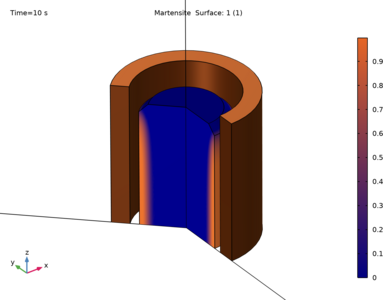
This example shows how to model induction hardening of a small steel pin. The ferritic-pearlitic pin is induction heated using a coil with a high frequency alternating current. The surface of the pin is thereby austenitized, and the pin is then water cooled to produce a hard, martensitic ... En savoir plus
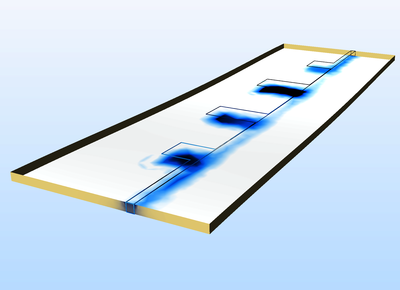
Microstrip filters can be fabricated directly on a printed circuit board (PCB) with a microstrip line going from the input to the output. Along the microstrip line there are a number of stubs of certain lengths and widths. The design of the filter involves choosing the impedance of the ... En savoir plus
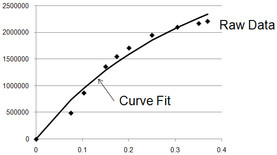
This presentation shows how to use the Optimization Module to fit a material model curve to experimental data. It is based on the hyperelastic Mooney-Rivlin material model example given in the Structural Mechanics users guide. En savoir plus
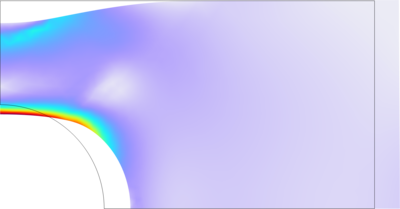
This example shows the analysis of a perforated plate loaded into the plastic regime. Part of the example is a benchmark, which you can find in section 7.10 of The Finite Element Method by O.C. Zienkiewicz. The unloading of the plate and residual stresses are also studied. In a second ... En savoir plus
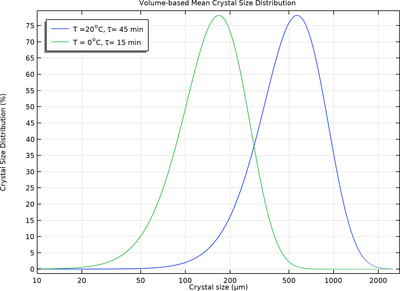
Crystallization is a key separation process in e.g. pharmaceuticals production. It is the process by which a chemical species is separated from solution by forming a crystal. To achieve the required product properties, control over the crystal particle size distribution is necessary. ... En savoir plus
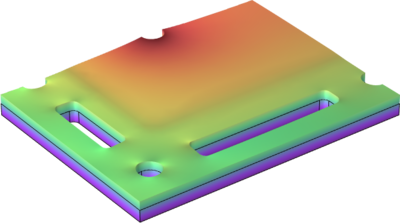
A fuel cell stack operates at temperatures just below 100 °C, which means that it has to be heated at start-up. The fuel cell stack consists of unit cell of anode, membrane, and cathode connected in series through bipolar plates. This study presents a model that couples the thermal and ... En savoir plus
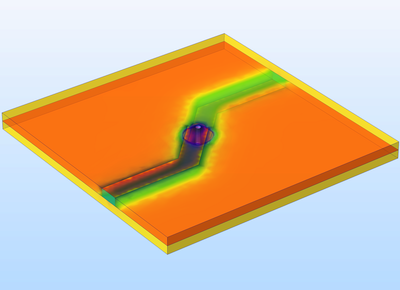
In signal integrity (SI) applications, time-domain reflectometry (TDR) is a useful technique for analyzing the discontinuity in a signal path by observing the reflected signal strength. The reflected signal distorts the input pulse mainly by impedance mismatch if there is no external ... En savoir plus
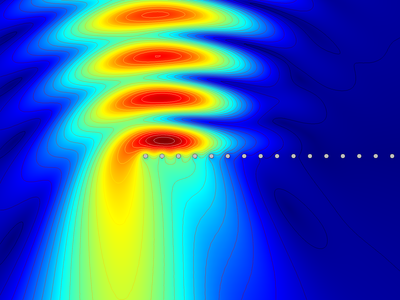
A Gaussian electromagnetic wave is incident on a dense array of very thin wires (or rods). The distance between the rods and, thus, the rod diameter is much smaller than the wavelength. Under these circumstances, the rod array does not function as a diffraction grating (see the Plasmonic ... En savoir plus
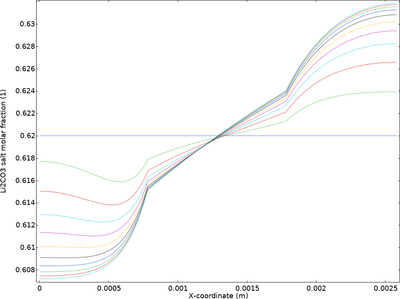
This tutorial shows how to model transport of the individual ions in a salt melt comprising two binary salts, where the transport equations are defined using concentrated solution theory. The example model defines a molten carbonate fuel cell (or electrolyzer), with a 1D-model geometry ... En savoir plus
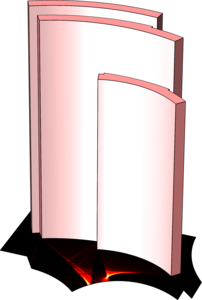
When the Vdara hotel first opened in Las Vegas, visitors relaxing by the pool would experience intense periods of heat at certain times of the day, at certain times of the year. This intense heat was caused by the reflection of solar radiation from the curved, reflective surface on the ... En savoir plus


