
La Bibliothèque d'Applications présente des modèles construits avec COMSOL Multiphysics pour la simulation d'une grande variété d'applications, dans les domaines de l'électromagnétisme, de la mécanique des solides, de la mécanique des fluides et de la chimie. Vous pouvez télécharger ces modèles résolus avec leur documentation détaillée, comprenant les instructions de construction pas-à-pas, et vous en servir comme point de départ de votre travail de simulation. Utilisez l'outil de recherche rapide pour trouver les modèles et applications correspondant à votre domaine d'intérêt. Notez que de nombreux exemples présentés ici sont également accessibles via la Bibliothèques d'Applications intégrée au logiciel COMSOL Multiphysics® et disponible à partir du menu Fichier.
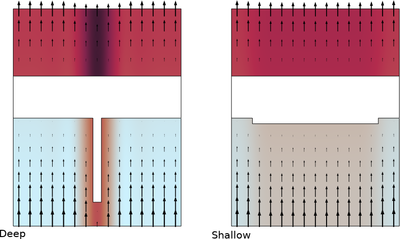
The copper current collector on negative graphite electrodes in lithium-ion batteries have been seen to dissolve at over discharge. This can be a safety concern as the dissolution damages the current collector irreversibly and dissolved copper ions can redeposit and form dendrites. ... En savoir plus
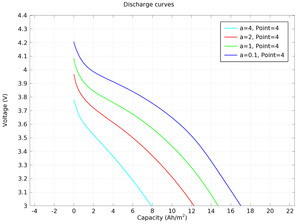
This model demonstrates the Lithium-Ion Battery interface for studying the discharge and charge of a lithium-ion battery for a given set of material properties. The geometry is in one dimension and the model is isothermal. Battery developers can use the model to investigate the influence ... En savoir plus
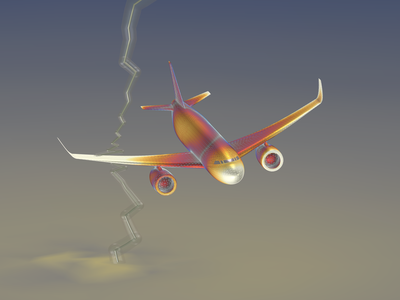
The model demonstrates how to compute the induced voltage of a wire loop inside an airplane under different electromagnetic shielding conditions. En savoir plus
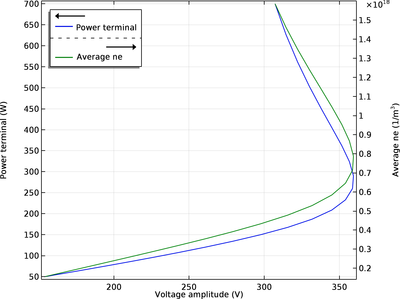
Capacitively coupled RF discharges can operate in two distinct regimes depending on the discharge power. In the low power regime, known as the alpha regime, the electric field oscillation is responsible to heat and create electrons. In the high power regime, known as gamma regime, the ... En savoir plus
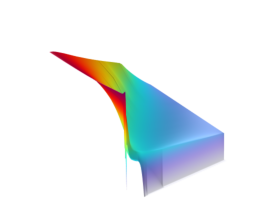
This model solves the Boltzmann equation in two-term approximation for a mixture of nitrogen and oxygen representing a background gas of dry air. Electron transport coefficients and source terms are computed by suitable integration of the electron energy distribution function over ... En savoir plus
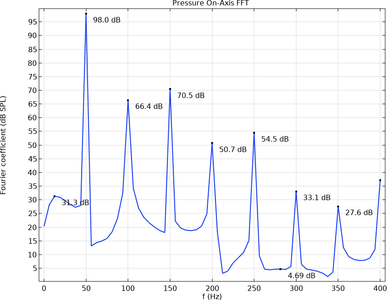
This model shows how to include the nonlinear (large signal) behavior of certain lumped components in a simplified loudspeaker analysis. The mechanical and electrical system is modeled using an equivalent electrical circuit. The large signal compliance CMS(x) and force factor BL(x) are ... En savoir plus
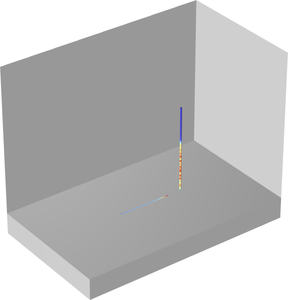
This model computes the lightning-induced voltage on an overhead line positioned above a lossy ground. It includes parameters like the inclination angle of lightning channels and soil conductivity, enabling straightforward analysis of their impacts. The calculated induced voltage aligns ... En savoir plus
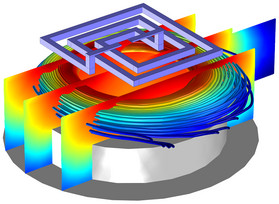
The COMSOL® software includes capabilities for 3D plasma modeling. In this example, a square coil is placed on top of a dielectric window and is electrically excited at 13.56 MHz. A plasma is formed in the chamber beneath the dielectric window, which contains argon gas at low ... En savoir plus
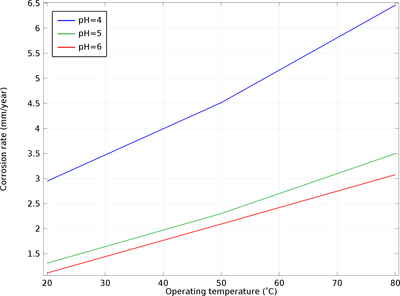
Carbon dioxide in aqueous solution is highly corrosive and can cause significant damage to steel designs. Such conditions arise in pipes used in a variety of applications, especially within the petrochemical industry. In this tutorial example, turbulent flows consisting of carbon ... En savoir plus
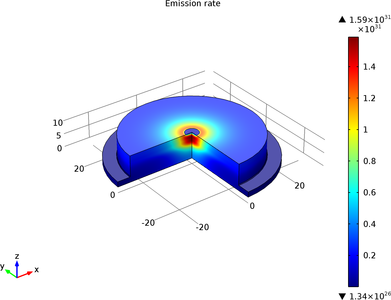
This model simulates an LED that emits in the infrared part of the electromagnetic spectrum. The device structure is made up of a single p-n junction formed by a layer of p-type doping near the top surface of an otherwise n-type wafer. This kind of device geometry is simple and cheap to ... En savoir plus


