
Lorenzo Bortot, CERN, Switzerland
Engineers and physicists at CERN go to great lengths to ensure that the high-power superconducting magnets that maintain the circular trajectory of particles inside the Large Hadron Collider (LHC) do not revert to a resistive state, an event known as a quench. To understand and prevent quench events, Lorenzo Bortot, an electrical engineer and research fellow at CERN, used numerical simulation to develop a multiphysics, multiscale, and multirate representation of the electrodynamics and thermal evolution of a quench event.
Suggested Stories
Boost Sales and Build Stronger Relationships with the Deployment of Simulation Apps
Proofs of concept are often the deciding factor in gaining the trust of a customer and generating a sale. But for high ...
Designing an Eco-Friendly Anode Baking Process with Numerical Modeling
Aluminum is extracted through the Hall–Héroult process, during which it is removed from bauxite using green anodes. A ...
Forecasting Fruit Freshness with Simulation Apps
Swiss research organization Empa built multiphysics models and compiled a simulation application that feeds results ...
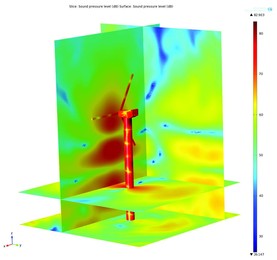
Wind Turbine Noise Reduction
Xi Engineering Consultants Ltd specializes in complex vibration issues, like those caused by wind turbines. The ...


