
Lorenzo Bortot, CERN, Switzerland
Engineers and physicists at CERN go to great lengths to ensure that the high-power superconducting magnets that maintain the circular trajectory of particles inside the Large Hadron Collider (LHC) do not revert to a resistive state, an event known as a quench. To understand and prevent quench events, Lorenzo Bortot, an electrical engineer and research fellow at CERN, used numerical simulation to develop a multiphysics, multiscale, and multirate representation of the electrodynamics and thermal evolution of a quench event.
Suggested Stories
Producing Power, Protecting Fish with a Darrieus Water Turbine
Physixfactor used simulation to design a water turbine for use in coastal flood control structures in the Netherlands. ...
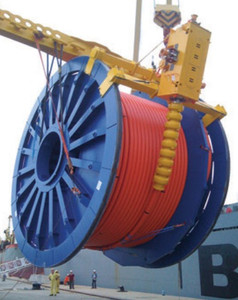
Analysis of Subsea Umbilicals and Cables
JDR Cables designs-to-spec and manufactures subsea umbilical systems of cables and reelers for the oil and gas and ...
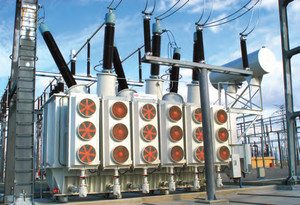
Upgrading the Nuts and Bolts of the Electrical Grid for a New Generation
Migrating the electrical grid to a “smart grid” is usually discussed in terms of IT issues or embedded systems. Yet, ...
Heating Buildings with Solar Energy Stored in Sand
Polar Night Energy used thermal modeling to optimize the design of a heat storage and distribution system powered by ...


