
Harvey Buck, Roche Diagnostics Operations, Inc., Indianapolis, IN, USA
The test strips in glucose monitors, widely used by people with diabetes to maintain good health, are sensitive to chemical interferences and environmental conditions. The manufacturing process and electrode configuration of these strips also affects response accuracy. Researchers at Roche Diagnostics Operations, Inc. used multiphysics simulation to analyze the chemical reactions and voltage response in their glucometers.
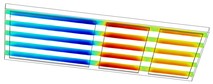
Using COMSOL Multiphysics, Harvey Buck, principal scientist at Roche, investigated different configurations and materials used in the test strips. He analyzed the electrical response to an applied voltage during the chemical reaction catalyzed in a sample. Through numerical simulation, he predicted the sensitivity of electrical impedance measurements to mechanical properties of the sensor. He also optimized the electrode configuration, maximized sensitivity to cell fraction in a sample, and minimized sensitivity to manufacturing tolerances. These simulation results have given the Roche team a better understanding of their integrated sensor design for glucose monitoring.
Suggested Stories
Let There Be Light: A Brighter Future for OLEDs
As the demand for lightweight and flexible electronics continues to increase, so does the demand for lightweight and ...

L'utilisation croissante de la simulation dans l'industrie biomédicale
Des implants et stents à l'IRM et à la stimulation de la moelle épinière, la modélisation numérique est essentielle au ...
Modeling the Electrochemistry of Blood Glucose Test Strips
Lifescan Scotland is a medical device company that designs and manufactures blood glucose monitoring kits for the ...
Keynote: Electroacoustics and FEA: A Long and Successful Relationship
In the world of electroacoustics, finite element analysis (FEA) has been in use for decades. The COMSOL ...


