
Jean-Louis Gelet and Antoine Gerlaud
Mersen, France
Large electrical systems carrying high currents could pose a danger if any of their components, such as fuses and bus bars, fail. In order to increase safety and improve manufacturing, it is necessary to understand the failure mechanisms of those components. One of those components, a bus bar, is made up of a single piece of conducting metal that replaces individual, thick cables when conducting a large current across a short distance and to many loads.
Mersen, an international company with expertise in surge protection, manufactures bus bars that are laminates with a film of insulating material glued between conducting plates at different potentials. If the temperature in a bus bar gets too high, however, the glue or insulation can be destroyed.
A group at Mersen, focusing on electric protection, used COMSOL simulations to determine the temperature field generated by the Joule effect, and eliminate any identified hot spots.
Suggested Stories
Keynote: Electroacoustics and FEA: A Long and Successful Relationship
In the world of electroacoustics, finite element analysis (FEA) has been in use for decades. The COMSOL ...
From Nanoantennas to Deep Space Satellites, Electron Emission Enables Efficient Power Generation
Researchers from the Italian Institute of Technology (IIT) and the European Space Agency (ESA) are developing power ...

Silent Air Cooling: A New Approach to Thermal Management
Removing heat from electronic devices is a necessity that up until now was achieved by rotary fans. Tessera, a company ...
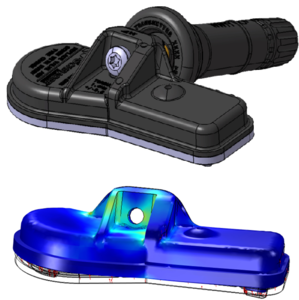
Optimizing Built-in Tire Pressure Monitoring Sensors
Built-in tire pressure sensors need to be able to withstand the wear and tear of working within a car’s tire rim. ...


