
NEXT ENERGY Analyzes Heat Transfer in Lithium-Ion Batteries
Gerd Liebig, Pamina Bohn, NEXT ENERGY EWE Research Centre for Energy Technology, Germany
Lithium-ion batteries, which have a tendency to degrade at high temperatures, must adhere to stringent regulations guaranteeing their ability to withstand operating temperature fluctuations. Researchers at NEXT ENERGY used heat transfer modeling to study whether high welding temperatures can create enough temperature propagation within cells to cause irreversible damage, such as electrolyte decomposition and capacity loss. They discovered that tab welding can, in fact, induce irreversible damage, but laser welding is significantly less detrimental.
Suggested Stories
Surface Plasmon Resonance
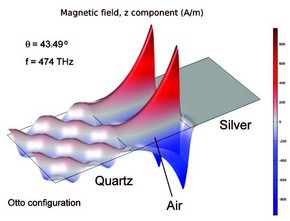
Surface Plasmon Resonance (SPR) is created by surface plasmons, coherent electron oscillations existing between any ...
Optimizing Fluid Sensors for Industrial Process Measurement
Endress+Hauser, a global leader in measurement instrumentation for industrial process engineering, is using ...
High-Voltage Switch Innovation for Electric Power Systems
Pinggao Group uses simulation apps and digital twins to design electric power system components. The apps have been ...
Efficient Grid Operation and Maintenance with Simulation Apps
Engineers at NARI Group Corporation developed the Cable Condition Analysis Expert System App, based on their ...


