
NEXT ENERGY Analyzes Heat Transfer in Lithium-Ion Batteries
Gerd Liebig, Pamina Bohn, NEXT ENERGY EWE Research Centre for Energy Technology, Germany
Lithium-ion batteries, which have a tendency to degrade at high temperatures, must adhere to stringent regulations guaranteeing their ability to withstand operating temperature fluctuations. Researchers at NEXT ENERGY used heat transfer modeling to study whether high welding temperatures can create enough temperature propagation within cells to cause irreversible damage, such as electrolyte decomposition and capacity loss. They discovered that tab welding can, in fact, induce irreversible damage, but laser welding is significantly less detrimental.
Suggested Stories
Optimizing a CVD Process for a High-Performance Tungsten Material
Researchers at Forschungszentrum Jülich GmbH, Institute for Energy and Climate Research, and Max Planck Institute for ...
Innovative Motor Designs for Electric Cars Come to Life
If electric vehicles are to ultimately transcend from niche to mainstream, their motor designs must continually ...
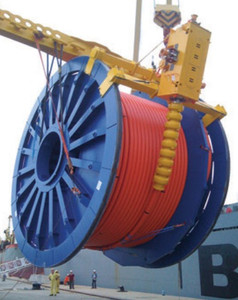
Analysis of Subsea Umbilicals and Cables
JDR Cables designs-to-spec and manufactures subsea umbilical systems of cables and reelers for the oil and gas and ...
Get a Quick Look at How Sonos Develops Innovative Smart Speakers
Innovative designs are typically not developed in one go. In this video, we meet Doug Button, distinguished audio ...


