
S. Lei, R. Enright, R. Frizzell, D. Hernon
Bell Labs, Ireland
The information and communication technology industry needs new energy-efficient devices that can keep up with the explosive growth in data traffic of the last few years. Bell Labs, the research arm of Alcatel-Lucent, is taking the lead in an initiative to reduce the carbon footprint of high-speed communication devices and platforms by investing in new methods for cooling electronics and harvesting energy. The team at Bell Labs used COMSOL Multiphysics to simulate the optical, thermal, and electrical performance of laser systems with integrated microthermoelectric coolers; they used their results to optimize designs of photonic devices and take advantage of the thermoelectric effect. They also simulated the structural, magnetic, and electrical behavior of electromechanical systems to investigate the best design for converting mechanical vibrations into electricity, which will reduce the need for frequent battery replacements for wireless sensors. With their continued research into these topics and the power of simulation, many new technologies for improving energy efficiency are on the horizon.
Suggested Stories
Optimizing Fluid Sensors for Industrial Process Measurement
Endress+Hauser, a global leader in measurement instrumentation for industrial process engineering, is using ...
Illuminating Complex Material Behavior with Multiphysics Simulation
At Canadian Nuclear Laboratories, multiphysics simulation is used to gain insight into the behavior of nuclear fuel ...
Researching a New Fuel for the HFIR: Advancements at ORNL Require Multiphysics Simulation to Support Safety and Reliability
In response to the increasing awareness of the risks associated with the proliferation of nuclear materials, the ...
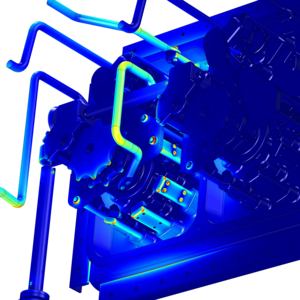
Dielectric Stress Simulation Advances Design of ABB Smart Grid-Ready Tap Changers
Consumers of power rely on fairly stable voltages. Transformers contain tap changers which vary the ratio of secondary ...


