
Researchers at Massachusetts General Hospital Simulate Inertial Focusing
J. Martel and M. Toner
Biomems Resource Center
Massachusetts General Hospital
USA
N. Elabbasi, D. Quinn, and J. Bergstrom
Veryst Engineering
USA
In many medical procedures and tests, it is necessary to isolate cells of interest for further analysis. Microfluidics has revolutionized the way in which these tests are conducted enabling, for example, the ability to detect cancer from a blood sample.
One of the most promising microfluidic techniques to separate and concentrate cells is called inertial focusing. The equilibrium positions for a particle in curved channel flows are a function of several parameters and forces; it is difficult to investigate all possible permutations through experiments.
Researchers at the Biomems Resource Center at Massachusetts General Hospital have simulated this and determined the best design. The CFD model they created took channel dimensions, particle size, Reynolds particle number, Reynolds channel number, and Dean number into account. Standard particle tracing was not applicable to predict inertial focusing and ODEs specifying the equilibrium of the particle in terms of its linear and angular velocities were included. The simulation results were in agreement with the experimental measurements, and they illustrate the dependence of the equilibrium positions on the channel curvature
Suggested Stories
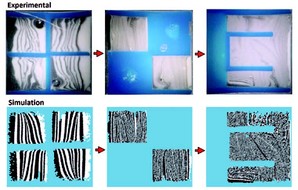
Modeling of Laminar Flow Static Mixers
Veryst Engineering, a company that provides consulting in engineering design and product manufacturing, has ...
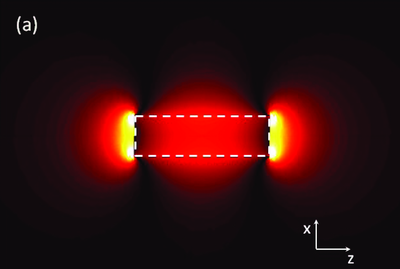
Nanoresonators Get New Tools for Their Characterization
Nanoresonators, or optical nanoantennas, manage the concentration, radiation, and absorption of light at the nanometer ...
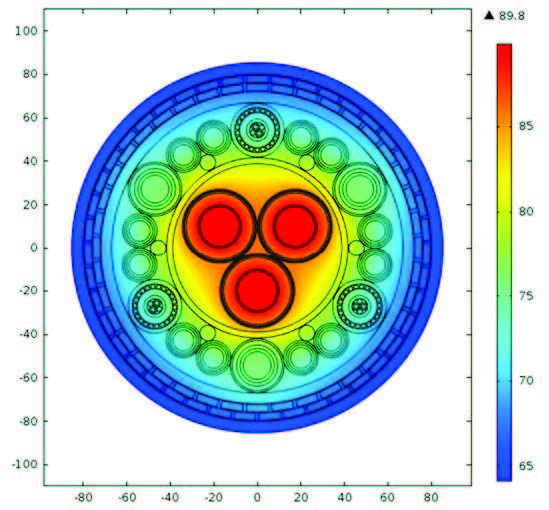
Simulation Software Brings Big Changes to Cable Industry
The design and testing of high-voltage cables for terrestrial and submarine applications is paramount to Prysmian's ...
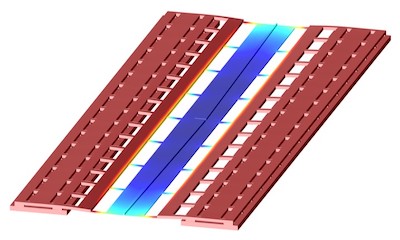
Designing a Silicon Photonic MEMS Phase Shifter with Simulation
Researchers at the Swiss Federal Institute of Technology Lausanne are using simulation to optimize the optical and ...


