
Harvey Buck, Roche Diagnostics Operations, Inc., Indianapolis, IN, USA
The test strips in glucose monitors, widely used by people with diabetes to maintain good health, are sensitive to chemical interferences and environmental conditions. The manufacturing process and electrode configuration of these strips also affects response accuracy. Researchers at Roche Diagnostics Operations, Inc. used multiphysics simulation to analyze the chemical reactions and voltage response in their glucometers.
Using COMSOL Multiphysics, Harvey Buck, principal scientist at Roche, investigated different configurations and materials used in the test strips. He analyzed the electrical response to an applied voltage during the chemical reaction catalyzed in a sample. Through numerical simulation, he predicted the sensitivity of electrical impedance measurements to mechanical properties of the sensor. He also optimized the electrode configuration, maximized sensitivity to cell fraction in a sample, and minimized sensitivity to manufacturing tolerances. These simulation results have given the Roche team a better understanding of their integrated sensor design for glucose monitoring.
Suggested Stories
Shake, Rattle, and Roll
The Norwegian Geotechnical Institute (NGI) is an international center for research and consulting that investigates ...
Multiphysics Modeling in the Biopharma Industry
Amgen, a leading multinational biopharmaceutical company, produces various drug products that have treated serious ...
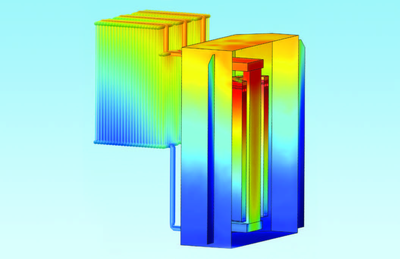
Simulation Enables the Next Generation of Power Transformers and Shunt Reactors
From power generation to its distribution to end users, power transformers and shunt reactors are used throughout the ...
Restoration of Lake Water Environments
Human activity steals oxygen from natural water sources such as lakes and this oxygen-deficient water often contains ...


