
India's National Chemical Laboratory Optimizes Fuel Cells via Modeling
Ashish Lele, National Chemical Laboratory, India
Inefficient and potentially harmful diesel generators are still the prevailing method of decentralized power generation for telecommunications in urban and rural India. Researchers at the National Chemical Laboratory are investigating proton exchange membrane (PEM) fuel cells, which are strong candidates for this industry because of their cleanliness, compatibility, and efficiency exceeding 30% (with work underway to further increase this value). Using multiphysics modeling and simulation, the researchers are working to determine an optimal configuration of fuel cell properties that yields maximum efficiency and performance.
Suggested Stories
Identifying the Root Cause of Electronics Failures with Simulation Apps
The Centre for Electronic Corrosion (CELCORR) research group at the Technical University of Denmark predicts ...
Improving Efficiency in Iron Ore Sintering
VDEh-Betriebsforschungsinstitut (BFI) is one of Europe’s leading research institutions in the development of iron- and ...
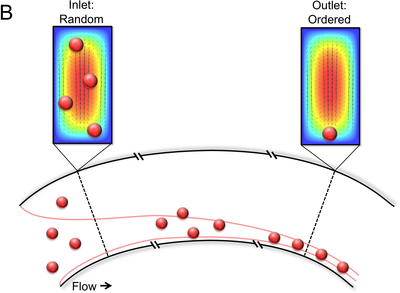
Modeling Inertial Focusing in Straight and Curved Microfluidic Channels
In many medical procedures and tests, it is necessary to isolate cells of interest for further analysis. Microfluidics ...
Music to Your Ears: New Transducers Meet Electrostatic Headphones
Electrostatic transducers offer enhanced clarity, less distortion, and a wider bandwidth than transducers in ...


