
NEXT ENERGY Analyzes Heat Transfer in Lithium-Ion Batteries
Gerd Liebig, Pamina Bohn, NEXT ENERGY EWE Research Centre for Energy Technology, Germany
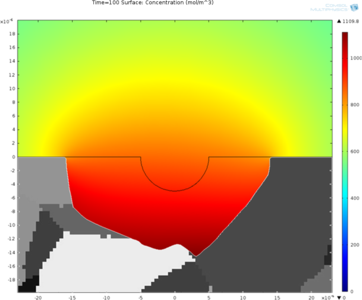
Lithium-ion batteries, which have a tendency to degrade at high temperatures, must adhere to stringent regulations guaranteeing their ability to withstand operating temperature fluctuations. Researchers at NEXT ENERGY used heat transfer modeling to study whether high welding temperatures can create enough temperature propagation within cells to cause irreversible damage, such as electrolyte decomposition and capacity loss. They discovered that tab welding can, in fact, induce irreversible damage, but laser welding is significantly less detrimental.
Suggested Stories
Get an Inside Look at an Innovative Rainwater Drainage System
Step into a busy neighborhood in Copenhagen, Denmark, to see how a multidisciplinary urban planning team used ...
Producing Power, Protecting Fish with a Darrieus Water Turbine
Physixfactor used simulation to design a water turbine for use in coastal flood control structures in the Netherlands. ...
Simulation-Led Strategy for Corrosion Prevention
Corrosion is a widespread concern costing the US billions of dollars annually. For the Navy, specifically, it is the ...
Simulating Laser-Material Interactions
California-based Lawrence Livermore National Laboratory (LLNL) oversees the National Ignition Facility (NIF), which ...


