
NEXT ENERGY Analyzes Heat Transfer in Lithium-Ion Batteries
Gerd Liebig, Pamina Bohn, NEXT ENERGY EWE Research Centre for Energy Technology, Germany
Lithium-ion batteries, which have a tendency to degrade at high temperatures, must adhere to stringent regulations guaranteeing their ability to withstand operating temperature fluctuations. Researchers at NEXT ENERGY used heat transfer modeling to study whether high welding temperatures can create enough temperature propagation within cells to cause irreversible damage, such as electrolyte decomposition and capacity loss. They discovered that tab welding can, in fact, induce irreversible damage, but laser welding is significantly less detrimental.
Suggested Stories
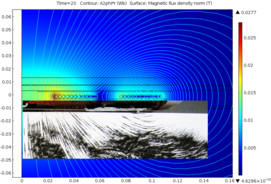
Multiphysics Simulation Helps Miele to Optimize Induction Stove Designs
The induction stove was designed to meet a consumer need for better precision and speed than traditional stoves. ...
Étude de la communication intracorporelle pour les stimulateurs cardiaques sans fil
MicroPort CRM utilise la simulation numérique pour optimiser la conception des stimulateurs cardiaques sans fil (LCP) ...
Multiphysics Modeling in the Biopharma Industry
Amgen, a leading multinational biopharmaceutical company, produces various drug products that have treated serious ...
On the Cutting Edge of Hearing Aid Research
Nearly 20% of the United States population has some degree of hearing impairment. Despite the relative ...


