
NEXT ENERGY Analyzes Heat Transfer in Lithium-Ion Batteries
Gerd Liebig, Pamina Bohn, NEXT ENERGY EWE Research Centre for Energy Technology, Germany
Lithium-ion batteries, which have a tendency to degrade at high temperatures, must adhere to stringent regulations guaranteeing their ability to withstand operating temperature fluctuations. Researchers at NEXT ENERGY used heat transfer modeling to study whether high welding temperatures can create enough temperature propagation within cells to cause irreversible damage, such as electrolyte decomposition and capacity loss. They discovered that tab welding can, in fact, induce irreversible damage, but laser welding is significantly less detrimental.
Suggested Stories
Magnetic Transmissions Increase Lifespan of Offshore Wind Farms
Sintex is a developer and manufacturer of magnetic couplings, systems that transmit torque and power with ...
Democratizing Simulation with Applications
Veryst Engineering, AltaSim Technologies, and GLL Bio-Med Analytics build applications in COMSOL Multiphysics ...
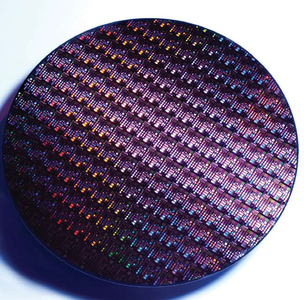
Pushing the Limits of Chip Density
Chip manufacturers have been adhering to Moore’s law, a law stating that the number of transistors that can be ...
Designing the Gold Standard of Immersive Audio for Virtual Reality Gaming
Tectonic Audio Labs used electromagnetics, mechanical, and acoustics simulation to develop a state-of-the-art balanced ...


