
Altran Designs Frequency Selective Surfaces with Simulation
F. De Vita, S. Di Marco, F. Costa and P. Turchi
Altran, Italy
Stealth airplanes and ships avoid radar detection by optimizing the shape of surfaces to reflect away from the radar source or absorb its energy. Yet, if a ship or aircraft’s antenna for communication purposes is to operate properly, it cannot be completely covered up. This makes it one of the remaining components with a large radar cross section and can essentially destroy the overall system’s invisibility to radar.
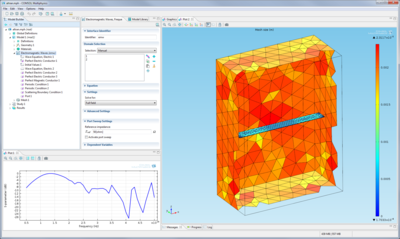
Altran, a global leader in innovation and high-tech engineering consulting, set out to design frequency selective surfaces with geometrical patterns that would optimize the stealth technology. The performance of a FSS is linked to its shape, thickness, choice of substrates and the phasing between individual elements. There are many possibilities, and testing each one physically would be time consuming for designers. Altran turned to simulation with COMSOL Multiphysics to investigate the frequency responses of a variety of shapes and sizes and how they are distributed on a surface in order to find promising candidates in just minutes.
Suggested Stories

Communicating from Space: The Front End of Multiscale Modeling
As satellites and astronauts travel further out in space, the more communication challenges they are faced with. This ...
Developing Ultrathin Dolby Atmos® Enabled Speaker Technology for Home Entertainment Systems
3D surround sound technology creates a premium and fully immersive audio experience for consumers. Dolby Laboratories ...
Picking the Pattern for a Stealth Antenna
Stealth airplanes and ships avoid radar detection by optimizing the shape of surfaces to reflect away from the radar ...
Un modèle d'oeil humain, paramétrique et en 3D, offre 20 ans supplémentaires de confort de vision
Pour corriger la presbytie, les chercheurs de Kejako, une société suisse de technologie médicale, développent un ...


