
Ivana Milanovic, University of Hartford, USA
While covering the required fundamental material in undergraduate academic programs is the top priority, students require an extra set of knowledge and skills to flourish in the workforce. This is especially true in science, technology, engineering, and mathematics (STEM) fields, where there is rarely an abundance of time for inquiry-based learning and the development of field-specific skills. To address this issue, the University of Hartford integrated multiphysics modeling into their curricula. Using the Application Builder in the COMSOL Multiphysics® software, the university created simulation-based laboratory assignments through apps, which enhanced students’ physical intuition and their ability to visualize physical concepts.
Suggested Stories

The Science of Water Screening
Johnson Screens® are the manufacturers of steel screens that impede debris from lakes and rivers from entering pipes ...

Lightning-Proof Wind Turbines
Søren Find Madsen, Global Lightning Protection Services A/S, Lejre, Denmark Global Lightning Protection Services A ...
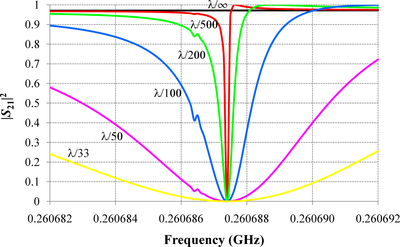
A 100-Fold Improvement in Lithography Resolution Realized with a 150-Year-Old “Perfect Imaging” System
The idea of "perfect imaging", that is a resolution less than the wavelength of light producing the image, was first ...
Boost Sales and Build Stronger Relationships with the Deployment of Simulation Apps
Proofs of concept are often the deciding factor in gaining the trust of a customer and generating a sale. But for high ...


