
La Bibliothèque d'Applications présente des modèles construits avec COMSOL Multiphysics pour la simulation d'une grande variété d'applications, dans les domaines de l'électromagnétisme, de la mécanique des solides, de la mécanique des fluides et de la chimie. Vous pouvez télécharger ces modèles résolus avec leur documentation détaillée, comprenant les instructions de construction pas-à-pas, et vous en servir comme point de départ de votre travail de simulation. Utilisez l'outil de recherche rapide pour trouver les modèles et applications correspondant à votre domaine d'intérêt. Notez que de nombreux exemples présentés ici sont également accessibles via la Bibliothèques d'Applications intégrée au logiciel COMSOL Multiphysics® et disponible à partir du menu Fichier.

In this model, we show how to model Seebeck effect which works as a thermoelectric generator. Seebeck effect is a phenomena where the difference in temperature of a material leads to a potential difference. The potential drawn in this model was compared with the paper by Jaegle (Example ... En savoir plus

This model studies the temperature effects on the viscoelastic stress relaxation in a long thick-walled cylinder. In particular, decay of the stresses under the influence of the temperature field during a period of two hours is studied. A four-term generalized Maxwell model represents ... En savoir plus
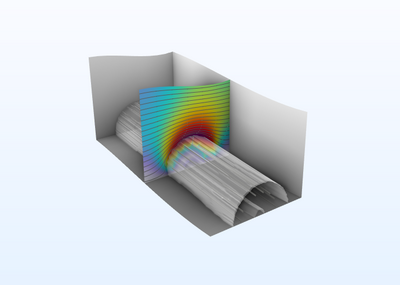
This thermo-hydro-mechanical (THM) model of artificial ground freezing couples heat transfer, groundwater flow, and soil mechanics to capture ice formation, pore-pressure changes, and ground deformation during tunnel excavation. The freezing process is modeled with the apparent heat ... En savoir plus
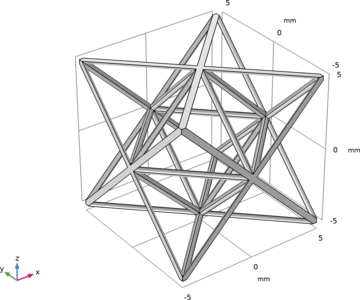
Lattice structures enable the creation of advanced materials for additive manufacturing with customized mechanical properties. At the macroscopic level, these structures can be modeled as homogeneous materials using homogenization techniques that determine their effective material ... En savoir plus
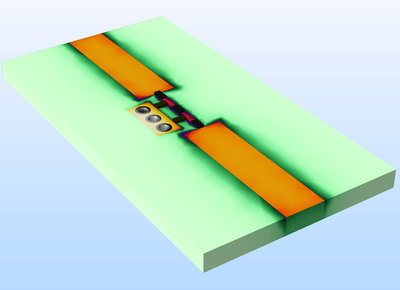
Passive devices can be designed using lumped element features if both the operating frequency of the device and the insertion loss of lumped elements are low. This example simulates two types of lumped element filters that are similar to lumped ports, except that they are strictly ... En savoir plus
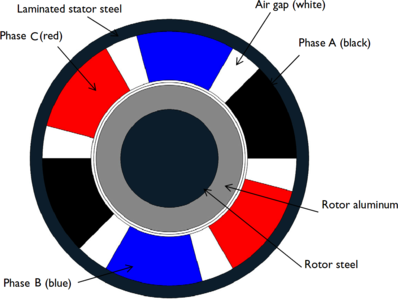
This is an example of a model of an induction motor in which the eddy currents are induced in the rotor by the time harmonic currents on the stator windings and the rotation of the rotor. In this example, we analyze the induction motor in 2D using the transient solver in the Rotating ... En savoir plus
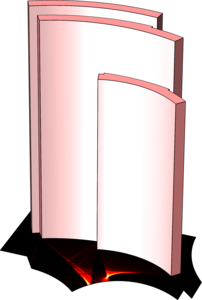
When the Vdara hotel first opened in Las Vegas, visitors relaxing by the pool would experience intense periods of heat at certain times of the day, at certain times of the year. This intense heat was caused by the reflection of solar radiation from the curved, reflective surface on the ... En savoir plus
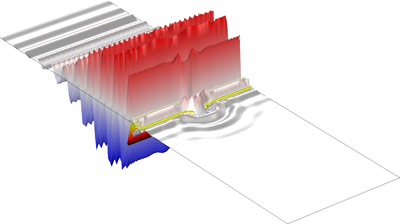
This tutorial shows how to solve the full time-dependent wave equation in dispersive media such as plasmas and semiconductors. The 2D TM in-plane wave model solves for the vector potential from the wave equation and for an auxiliary electric polarization density from an ordinary ... En savoir plus


