
La Bibliothèque d'Applications présente des modèles construits avec COMSOL Multiphysics pour la simulation d'une grande variété d'applications, dans les domaines de l'électromagnétisme, de la mécanique des solides, de la mécanique des fluides et de la chimie. Vous pouvez télécharger ces modèles résolus avec leur documentation détaillée, comprenant les instructions de construction pas-à-pas, et vous en servir comme point de départ de votre travail de simulation. Utilisez l'outil de recherche rapide pour trouver les modèles et applications correspondant à votre domaine d'intérêt. Notez que de nombreux exemples présentés ici sont également accessibles via la Bibliothèques d'Applications intégrée au logiciel COMSOL Multiphysics® et disponible à partir du menu Fichier.
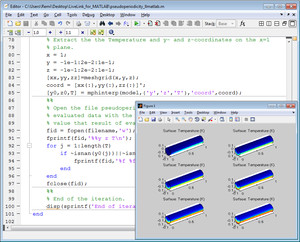
This model simulates convective heat transfer in a channel filled with water. To reduce memory requirements, the model is solved repeatedly on a pseudo-periodic section of the channel. Each solution corresponds to a different section, and before each solution step the temperature at the ... En savoir plus

Example for a geometry sequence to create a ship hull using Loft. The different cross sections are defined using Dimensions and Constraints. En savoir plus
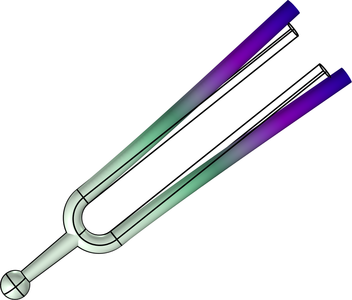
Extending the Tuning Fork model, this example shows how to set up an Optimization Study to determine the prong length at which the fork vibrates at the standard concert pitch, 440 Hz. En savoir plus
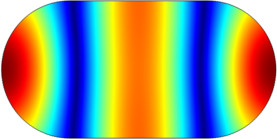
In this model, compute the propagating modes in the chamber of an automotive muffler. The geometry is a cross-section of the chamber in the Absorptive Muffler example. The model’s purpose is to study the shape of the propagating modes and to find their cut-off frequencies. As discussed ... En savoir plus

This is a benchmark model to test the numerical algorithms in the area of multibody dynamics. This model simulates the dynamic behavior of the slider crank mechanism. This mechanism goes through singular positions during its operation. The acceleration at a point is compared with the ... En savoir plus
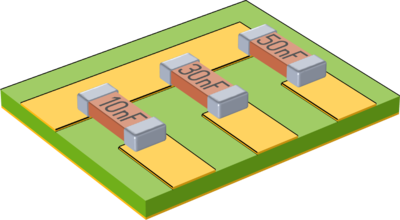
These models demonstrate the usage of the user defined lumped port and lumped elements to introduce excitations and lumped circuit elements between volumetric conductors. Additional models show how to use impedance and transition boundary conditions to model the conductors, instead of ... En savoir plus

These examples demonstrate how to use a job sequence to perform a programmatic sequence of operations, including solving; saving the model to file; and generating and exporting plot groups, results, and images. In the blog post associated with these files, "How to Use Job Sequences to ... En savoir plus
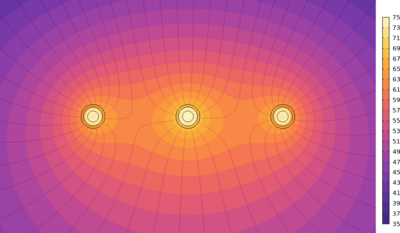
This model evaluates the temperature distribution in 3 buried cables in a situation where the soil surface temperature is known. The temperature profile obtained with a thermal circuit approach for the cables is compared with a FEM approach. The thermal circuit properties are established ... En savoir plus


