
La Bibliothèque d'Applications présente des modèles construits avec COMSOL Multiphysics pour la simulation d'une grande variété d'applications, dans les domaines de l'électromagnétisme, de la mécanique des solides, de la mécanique des fluides et de la chimie. Vous pouvez télécharger ces modèles résolus avec leur documentation détaillée, comprenant les instructions de construction pas-à-pas, et vous en servir comme point de départ de votre travail de simulation. Utilisez l'outil de recherche rapide pour trouver les modèles et applications correspondant à votre domaine d'intérêt. Notez que de nombreux exemples présentés ici sont également accessibles via la Bibliothèques d'Applications intégrée au logiciel COMSOL Multiphysics® et disponible à partir du menu Fichier.

This tutorial models the thermal management of a polymer electrolyte membrane (PEM) fuel cell stack. Operating the stack with a similar temperature profile for all cells is important since an uneven temperature distribution may otherwise result in nonuniform water vapor condensation and ... En savoir plus
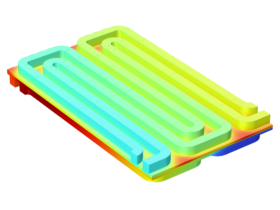
This tutorial explores the current distribution in a low-temperature PEMFC when using serpentine-based flow field patterns. The cell is operated in counter-flow mode so that the oxygen and hydrogen inlet flow streams are located at opposite sides. Relatively dry inlet gas compositions ... En savoir plus
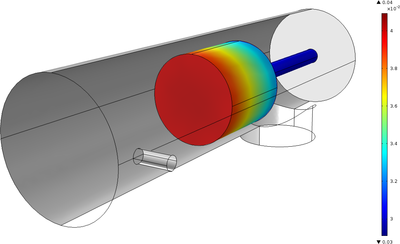
Chemical vapor deposition (CVD) is a process often used in the semiconductor industry to grow layers of high-purity solid material on top of a wafer substrate. CVD is achieved using many different techniques and across a range of pressures from atmospheric to ultrahigh vacuum (UHV/CVD). ... En savoir plus
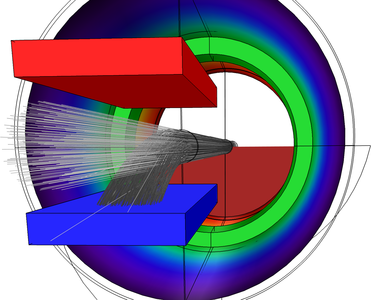
Gas cells have several applications in the design of scientific instruments. A gas cell is used to define a high-pressure region within the instrument's main vacuum system. For example, in this application, note we are designing a high-pressure region 100 mm long, with an operating ... En savoir plus
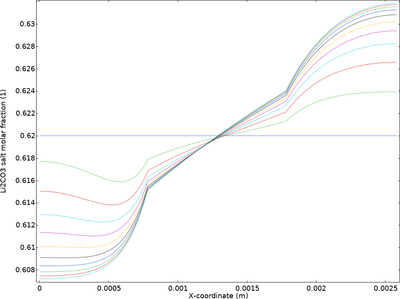
This tutorial shows how to model transport of the individual ions in a salt melt comprising two binary salts, where the transport equations are defined using concentrated solution theory. The example model defines a molten carbonate fuel cell (or electrolyzer), with a 1D-model geometry ... En savoir plus
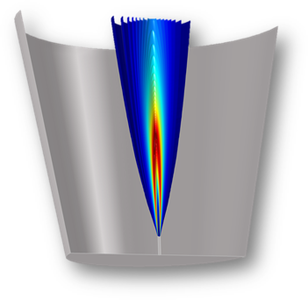
The model simulates non-premixed turbulent combustion of syngas (synthesis gas) in a simple round-jet burner. Syngas is a gas mixture, primarily composed of hydrogen, carbon monoxide and carbon dioxide. The name syngas relates to its use in creating synthetic natural gas. In the model, ... En savoir plus
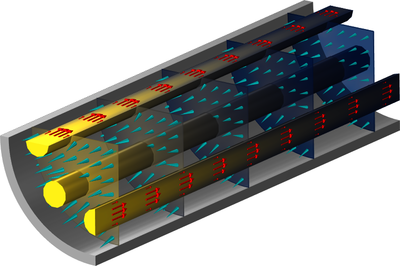
In fuel cell power generators, a steam reformer unit typically produces the hydrogen needed for the cell stack. This example illustrates the modeling of a steam reformer. The reformation chemistry occurs in a porous catalytic bed where energy is supplied through heating tubes to drive ... En savoir plus
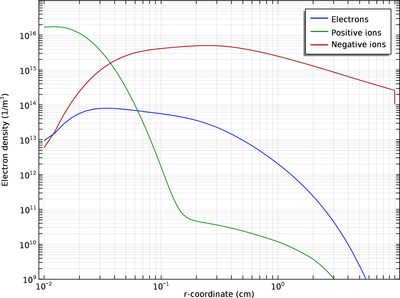
This tutorial model presents a study of a coaxial DC corona discharge in dry air at atmospheric pressure. The dimensions and operation conditions are similar to ones found in electrostatic precipitators with wire-to-plate configurations. The inner wire electrode has a 100-mm radius and ... En savoir plus
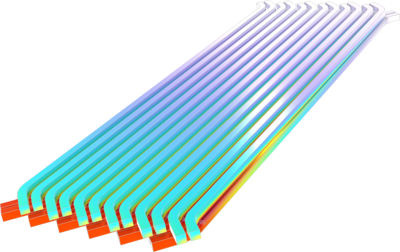
In a polymer electrolyte membrane fuel cell (PEMFC), water is produced at the cathode. The cell is also fed with water vapor via the inlet gas streams, in order to keep the polymer electrolyte membrane humidified. If the water partial pressure in the gas phase exceeds the vapor ... En savoir plus
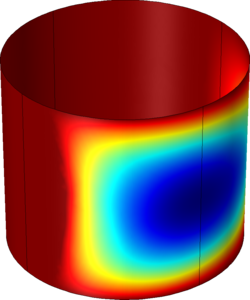
A journal bearing is composed of an outer cylinder (bearing) wrapped around an inner rotating journal (shaft), with a lubricant separating the two. Under certain operating conditions, cavitation can occur between the bearing and the journal, leading to component damage and failure. ... En savoir plus