
Lorenzo Bortot, CERN, Switzerland
Engineers and physicists at CERN go to great lengths to ensure that the high-power superconducting magnets that maintain the circular trajectory of particles inside the Large Hadron Collider (LHC) do not revert to a resistive state, an event known as a quench. To understand and prevent quench events, Lorenzo Bortot, an electrical engineer and research fellow at CERN, used numerical simulation to develop a multiphysics, multiscale, and multirate representation of the electrodynamics and thermal evolution of a quench event.
Suggested Stories
National Grid Models Underground Cable Routes
U.K. National Grid bears responsibility for maintaining the high-voltage transmission network in the U.K. Determining ...
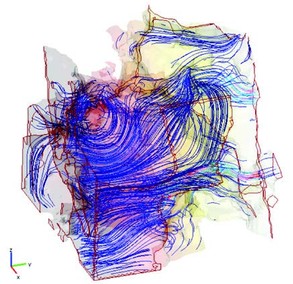
Analysis and Simulation of Rock Properties
VSG provides high-performance 3D visualization toolkits and software for a number of industries, including materials ...
Keynote: Leveraging Acoustics Simulation for Better Alexa® Devices
Watch this keynote talk to see how Amazon Lab126 uses the COMSOL Multiphysics® software to simulate and ...
Express Delivery: Simulation App Speeds Up Electric Truck Battery Design
Volvo Trucks is using a simulation app to help optimize electric truck batteries. The app can be used to help produce ...


